Arms and Accords

Arms and Accords

Geopolitical grand strategy

Any country in the world of today, from the figures of 1 January 2026: its economy, its politics, its alliances, its research and its forces, each connected to all the others.

In development · Windows

Coming soon to this page and your favourite videogame store.

Accords

Most of what is won in this world is won by agreement.

25 goods · 5 income classes

The economy

Every country makes, trades and consumes twenty-five goods, and its people are sorted into five income classes by the work they do. The world economy runs on its own; each government steers its share with taxes, spending and industry built by the state.
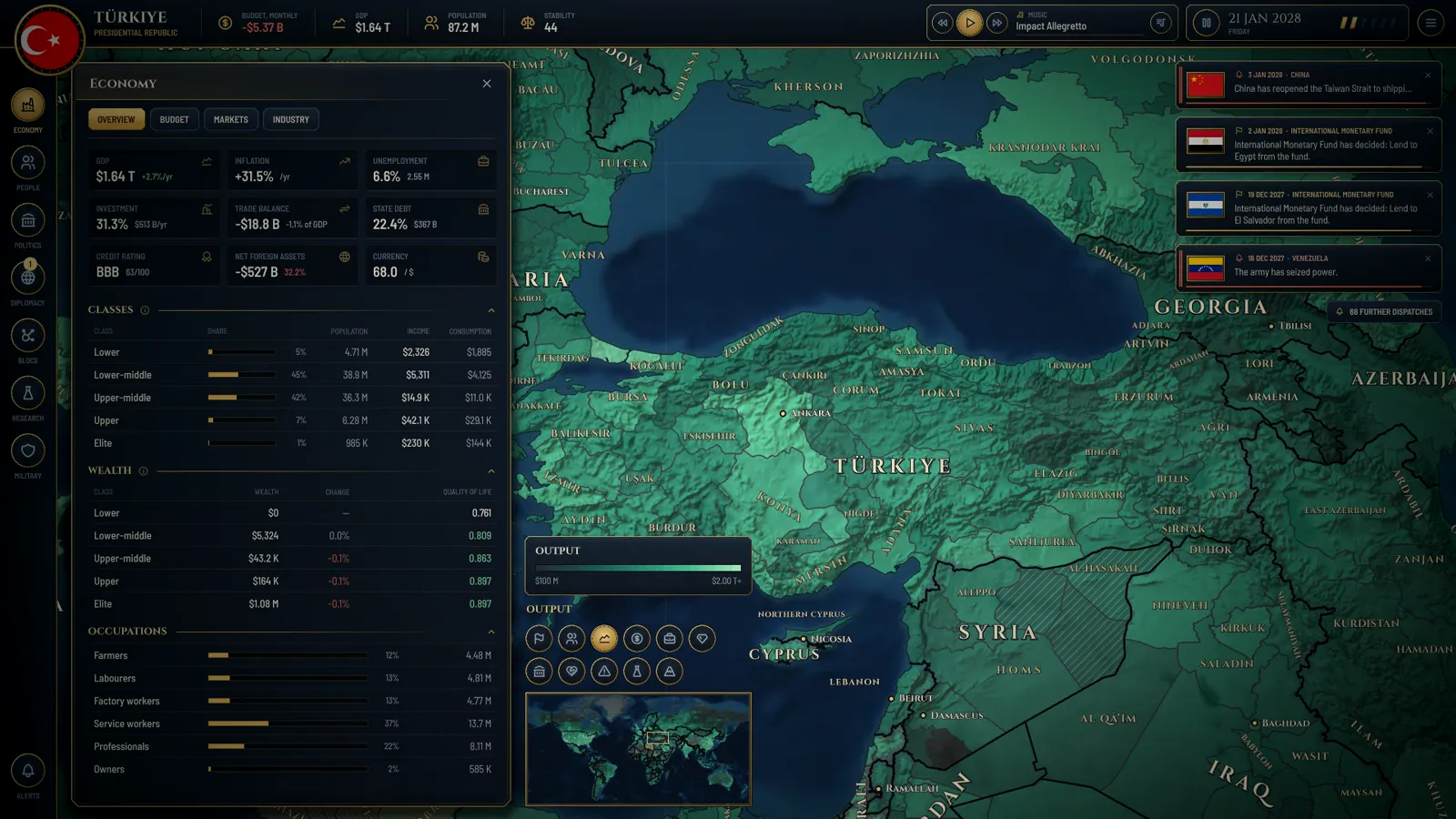
The Economy drawer open over Türkiye, its output, budget and income classes beside the map.

Real leaders, parties and regimes

Politics

People judge their government by how they are living. Governments are voted out, fall or are overthrown. A government that loses office to a rival outside its own camp ends the game.

Births, deaths, every migrant

People

Populations are born, age and die, with fertility falling as schooling rises. Everyone who moves is followed from birthplace to residence, choosing by income, work, safety, freedom and climate, and sending money home along every corridor.

67 real organisations

Diplomacy and organisations

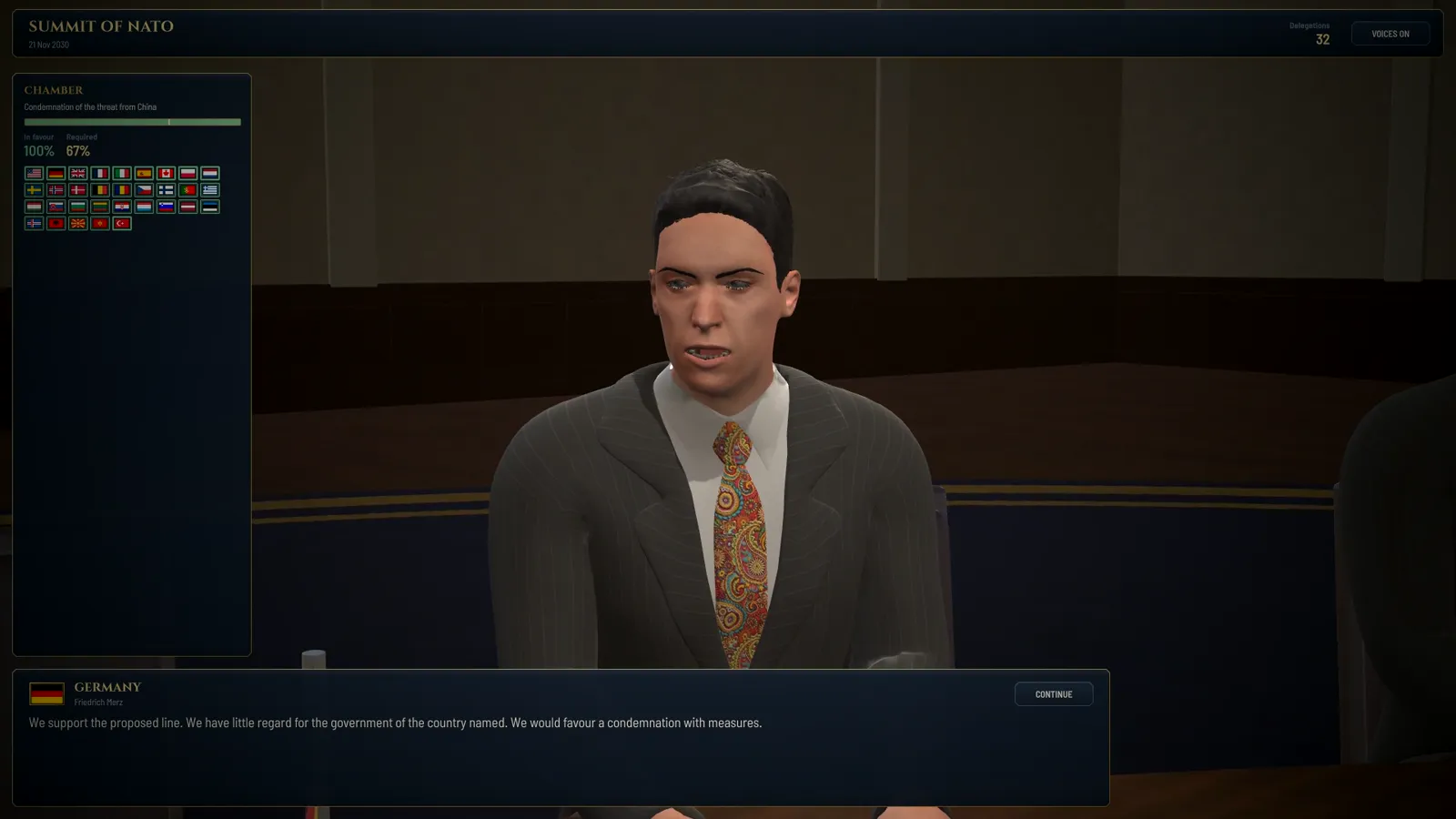
Every government holds an opinion of every other, starting where the two really stand, with treaties, sanctions, aid, threat and influence around it. Sixty-seven organisations, from the United Nations to OPEC+, act on their members and decide by vote at summits where every leader speaks in a voice of its own.

The NATO summit hall: the German delegate at the table states a position.

176 rungs in 11 fields

Research

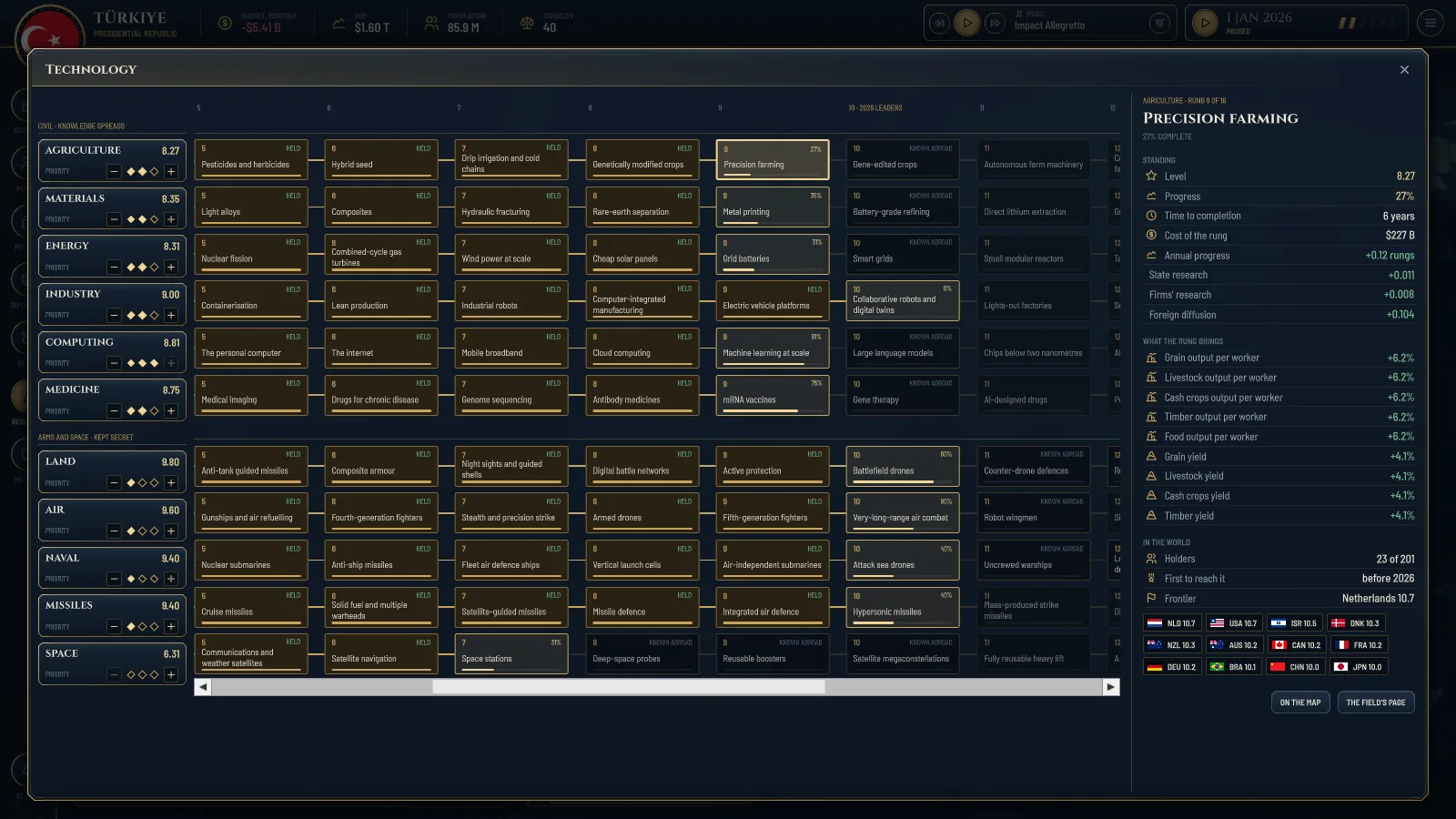
Each country starts where it really stands and climbs by the research of its state and its firms, and by taking in what others know. What it learns raises the yield of its land, the output of its industry, the lifespan of its people and the quality of its forces. Knowledge is shared by treaty and withheld as a weapon.

The technology tree: eleven fields in rows, each rung a named advance.

But agreement is a choice.

Arms

And when it fails, nations reach for what they built against that day.

Cells of 30 km · the published counts

The ground and the forces

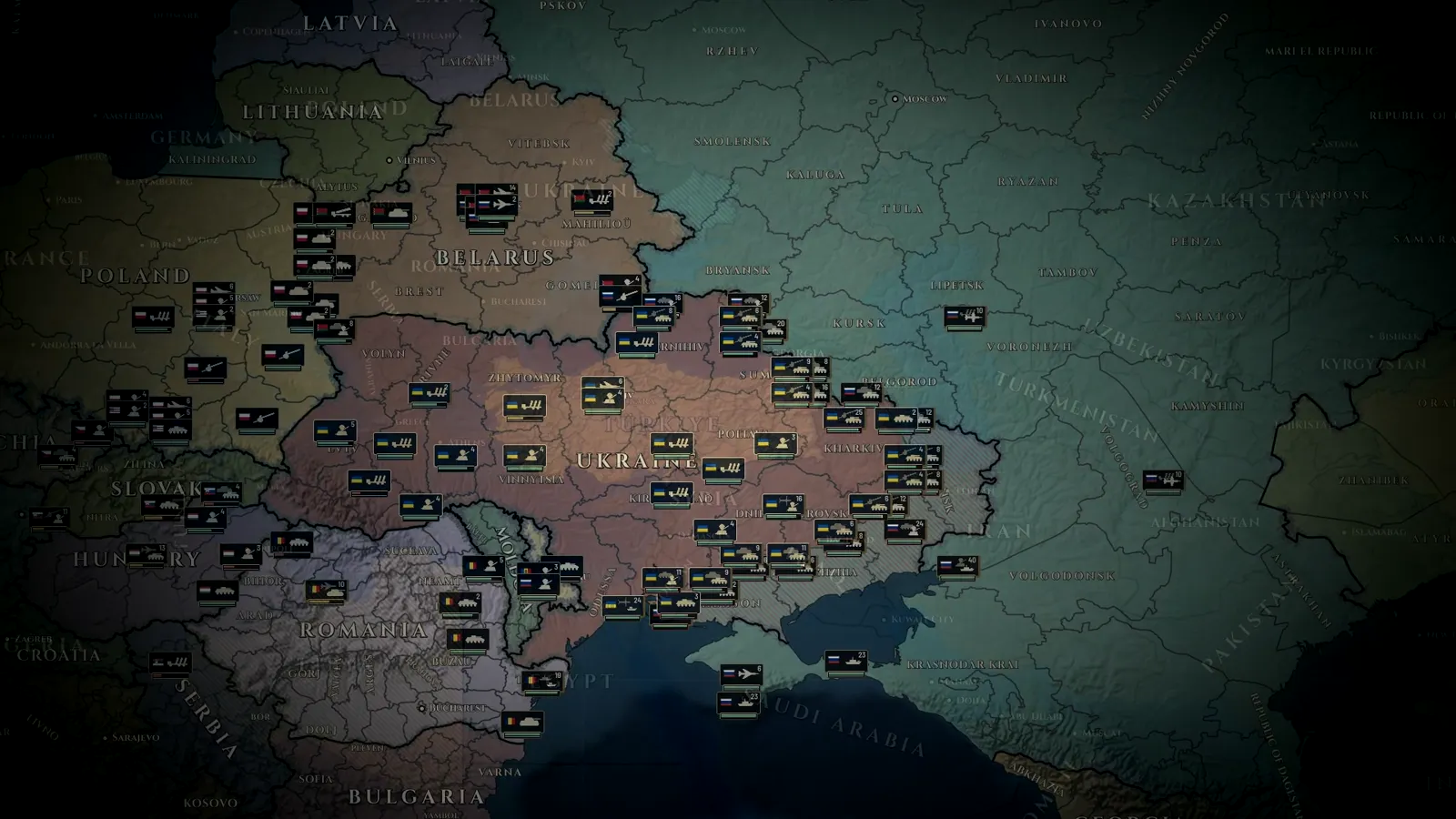
The world is cut into cells thirty kilometres across, each with its terrain, roads, rivers and people. Every country fields its real forces, formed from the published counts of its troops, tanks, aircraft and warships into units of named equipment under commanders, standing where its fears, towns, airfields and ports are.

The front of January 2026 from high above: both armies' units along the line through Ukraine.

From 1 January 2026

War on land

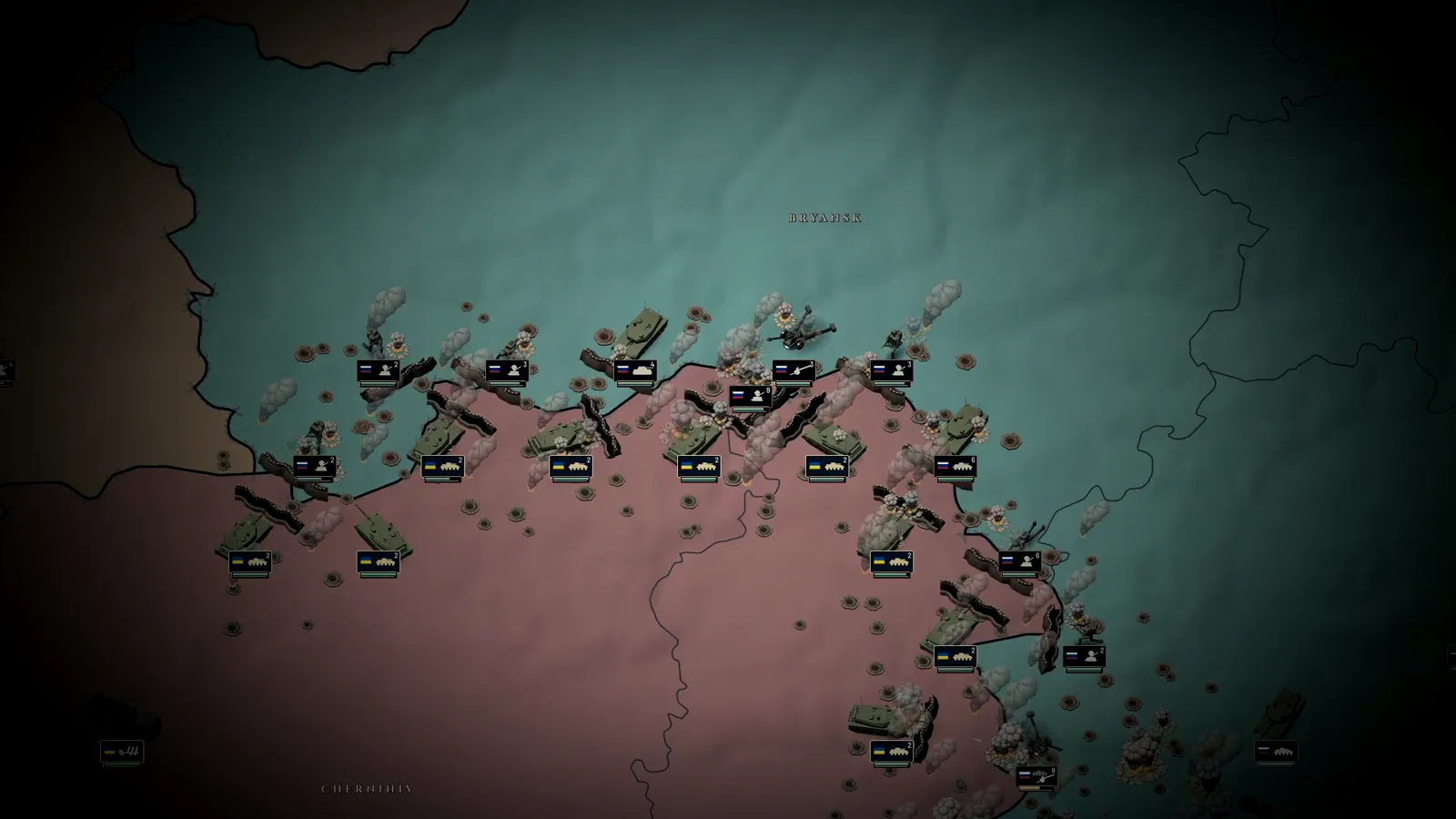
Demands, allies who agree to come, supply lines and depots; armies handed to their commanders with a stance and an objective; occupation and resistance; peace on terms, or a halt on the line. The game opens with Russia and Ukraine at war on the front as it stood on its first day.

Units fighting in range along the front: guns and armour firing, smoke rising.

Squadrons, fleets, missiles, drones

Air and sea

Squadrons fly missions; fleets sail, fight, blockade and land troops. Missiles and drones are made, stocked and fired at forces, bases, industry, power and cities, against air defences with interceptors of their own.

13 statistics to every model

Arms short of war

Arms are bought from any maker willing to sell, built under licence, improved, or designed anew. Governments arm others and give them units, send advisers, fly no-fly zones and blockade without a war, and every country keeps count of how far others have provoked it.

The real arsenals

Nuclear weapons

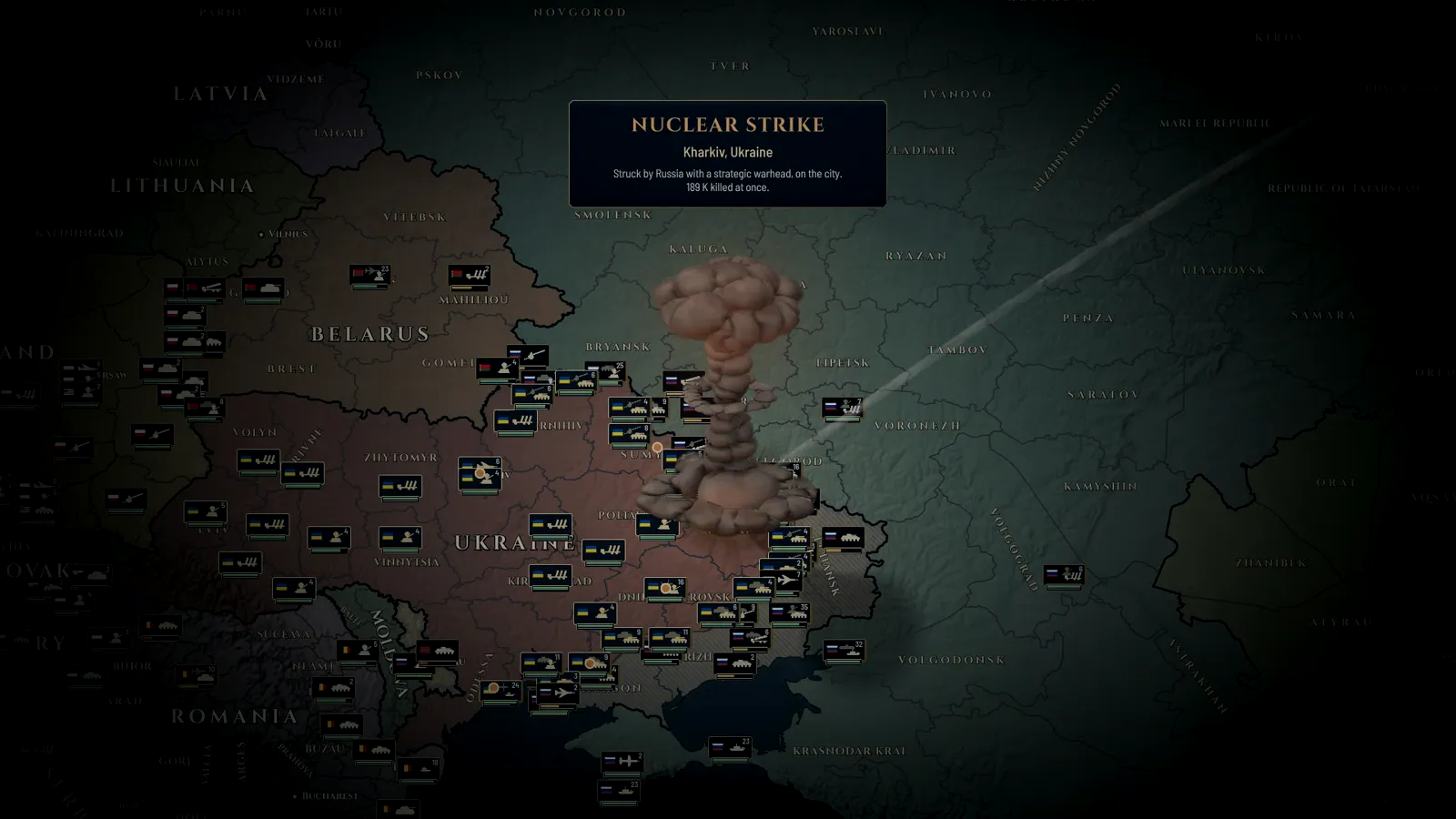
Warheads and their carriers, missile defence, strikes on forces or cities, fallout and outrage, a shaken world economy and, at scale, failed harvests. Every leader's readiness to use them weighs on every decision about war; programmes to build the bomb, Iran's among them, are pursued and stopped.

A nuclear strike on Kharkiv: the cloud rising over the map, the report of the strike above it.

20 armed movements · 13 prepared cases

Insurgency and new states

The armed movements of 2026, from the Rapid Support Forces in Sudan to the ELN in Colombia, hold ground on the map. They end crushed, in self-rule, in power-sharing, in independence, or in government. New states are born of rebels who win, of peace terms, and of votes in thirteen prepared cases from Scotland to Bougainville.

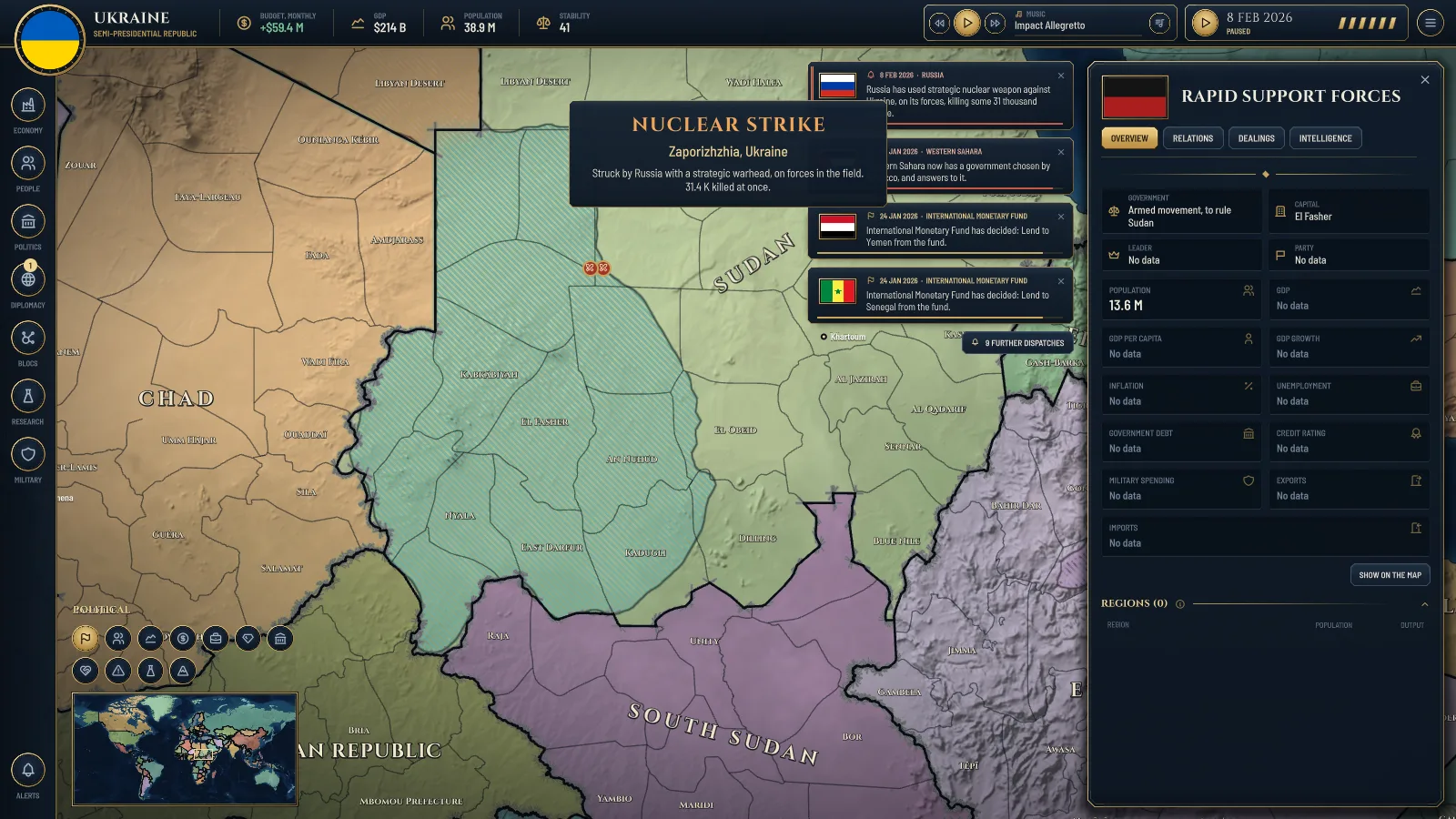
Sudan on the map with the ground held by the Rapid Support Forces, and the movement's file open beside it.

Every other government plays by the same rules

No government is scripted and none has orders the player lacks. Each sets its taxes and spending, divides its forces' budget, bargains, joins and leaves organisations, and goes to war from its own outlook and situation. Each pursues up to three aims over years, seen only in what it does: a claim pressed, research caught up, debt paid, growth, a bloc joined, a protector found, power held.

Every leader has a character on five axes. Today's leaders are set by hand from their record.

Existential dread
SecureBesieged
Caution
BoldCareful
Austerity
SpendingThrifty
Reach
RegionalGlobal
Disposition
WarlikePacific

The year 2026, on its real dates

The history of 2026 arrives as state papers on the dates it happened, while the world still looks as it did, each with the course actually taken marked. Every course of action works through the systems above. Forty-one further situations arise from the state of a country itself: fuel protests where prices run away, a run on the banks where lenders lose faith, refugees from a neighbour's war, a spy ring, a scandal, a general who speaks out.

And thirty more.

Trailers

The Last ArgumentThe story · 1:20
Every Lever of a StateThe mechanics · 1:26

Every shot is the game itself. The music is the game's own score.